

Say you run a small catering kitchen, and every night your crew hoses the floor down with hot water. Six months in, you spot a hairline crack near the dish pit. Grease has crept under a tile edge. It smells a little off, so you scrub harder. That doesn’t help.
The short answer for a kitchen like yours is a seamless resin floor, put in by an epoxy flooring contractor who understands heat and wet work, not just coatings. Here’s what that looks like in real life, and what to ask before anybody opens a bucket.
Why Kitchen Floors Break Differently
Hot Water and Cold Storage in One Shift
Kitchens punish floors in ways a warehouse never does. A walk in cooler sits a few steps from the fryer line, steam rolls off the dish machine, and somebody sprays down the whole room at closing. Concrete and thin coatings swell and shrink with all of that, and sooner or later something lets go.
HPS Flooring describes its kitchen system as thermal shock resistant. That phrase matters more than it sounds like it should. Roughly, it means the floor is made to cope when hot and cold land on it close together.
Seams Are Where Trouble Hides
Every seam is a place for water and grease to sit. Tile lines, and that gap where the floor meets the wall. Cleaners push past them, but never all the way.
That’s the reason seamless matters so much. HPS talks about integrated radius cove bases, which is the curved edge where the floor rolls up the wall, so there’s no sharp corner for grime to settle into. Mops reach it. Hoses rinse it.
Urethane Cement, Said the Easy Way
What the Page Says It’s For
For commercial kitchens and food and beverage plants, HPS lists urethane cement and slurry systems, and it names pharmaceutical cleanrooms as another place they go. Different buildings, same headache. Constant washdowns and temperature swings, plus inspectors who always look down.
I’d call it the heavy duty cousin of a regular epoxy coat. Plain epoxy is great in plenty of rooms. Kitchens just ask for more.
How to Search Without Wasting a Week
When you start calling epoxy flooring contractors in your area, check who actually lists kitchen and food plant systems on their site, and not only garage floors and basements. The product changes with the room, and a crew that has only ever done showroom floors might not know why a drain slope matters.
HPS says it has been installing epoxy floors since 1988, from its base in Green Brook, New Jersey. The page also mentions dozens of tough projects in and around the state. That’s not a guarantee of anything, but it’s a sign they’ve seen messy jobs before. A crew that has dealt with cracked, stained and tired floors across many years usually has a few opinions about what fails first.
Questions to Ask Before You Sign
Prep and Moisture Come First
Ask how the concrete gets prepared. HPS describes precision shot blasting or diamond grinding to reach an exact Concrete Surface Profile, or CSP, which is how a coating learns to hold on. Then ask about moisture testing, which the site’s FAQ brings up as well.
Picture an owner who skips that step because the schedule is tight. Three weeks later the surface lifts near the walk in, right where it’s wettest. Redoing it costs more than the test ever would have.
Crews, Sourcing and Paperwork
HPS says it doesn’t hire subcontractors, so the people who prep the floor are the same ones who finish it. It also says it isn’t tied to one manufacturer and buys from the industry’s top suppliers. Both are fair things to ask any of the epoxy flooring contractors on your list.
The FAQ on the site also suggests looking for a licensed crew and getting a warranty in writing. Good advice, honestly. Verbal promises evaporate the first time the kitchen is busy and nobody has time to argue.
Keeping the Kitchen Running
Closing for As Little Time as Possible
Nobody can lock a kitchen for a month. Revenue stops, and staff scatter. HPS says it aims for minimal downtime and long term durability, and it describes a turnkey service that runs from precision diamond grinding to the final topcoat.
Honestly, the best epoxy flooring contractor you can hire is one who asks about your delivery days and your slowest weekday before you ask about theirs. Maybe nights, maybe a quiet Monday. Ask what the plan is, then ask who’s on site. Ask how the floor gets handed back, too, and what you’re told about when it’s safe to roll heavy carts across it.
What Ten to Twenty Years Looks Like
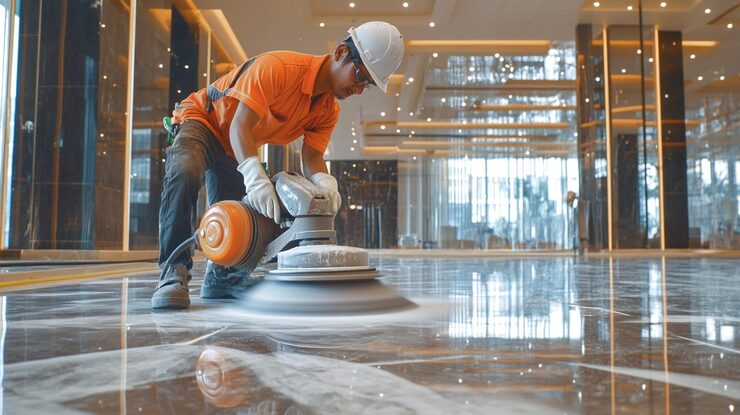
The page says a properly installed system can run ten to twenty years. Wide range, sure. Traffic matters, cleaning habits matter, and prep decides most of the rest.
Even so, picture a floor that doesn’t crack near the dish pit, doesn’t hold a smell, and doesn’t need a patch every few months. For a working kitchen, that kind of boring is exactly the goal. Pair it with a good epoxy flooring contractor and you’re not thinking about the floor at all, which is how it should be.
Life After the Install
A new floor isn’t a free pass. Say your crew keeps hosing it with scalding water at the same pressure as before. Ask the installer what the system can take and which cleaning routine they’d suggest. HPS doesn’t publish a cleaning schedule on its page, so that conversation is yours to have, and it’s worth having before the first shift.
Plenty of owners only call epoxy flooring contractors once something fails, but the talk goes better beforehand. Walk the room together. Point at the drain and at the threshold by the walk in cooler, where the old floor always stayed wet. Real details beat a sales sheet every time.
The Short Version
Kitchens need a floor built for heat, water and constant cleaning, and that usually points to a seamless system with a proper cove base. Ask about prep, moisture, crews and paperwork before price.
HPS Flooring LLC offers a free appointment form on its website and says it serves Somerset and Middlesex County, plus wider areas across New Jersey. If you’re comparing epoxy flooring contractors, put their answers side by side.
FAQs
Is epoxy flooring only for warehouses?
No. HPS also lists systems for commercial kitchens, food and beverage plants, locker rooms and corridors.
What does thermal shock resistant mean for a kitchen?
It points to a floor made to handle sudden swings between hot and cold, like steam, hot water and a cooler nearby.
Why do cove bases matter?
They curve the floor up the wall, so there’s no hard corner for dirt and water to collect.
Should I get a warranty?
Yes, and get it in writing. HPS’s own FAQ gives that same advice.